


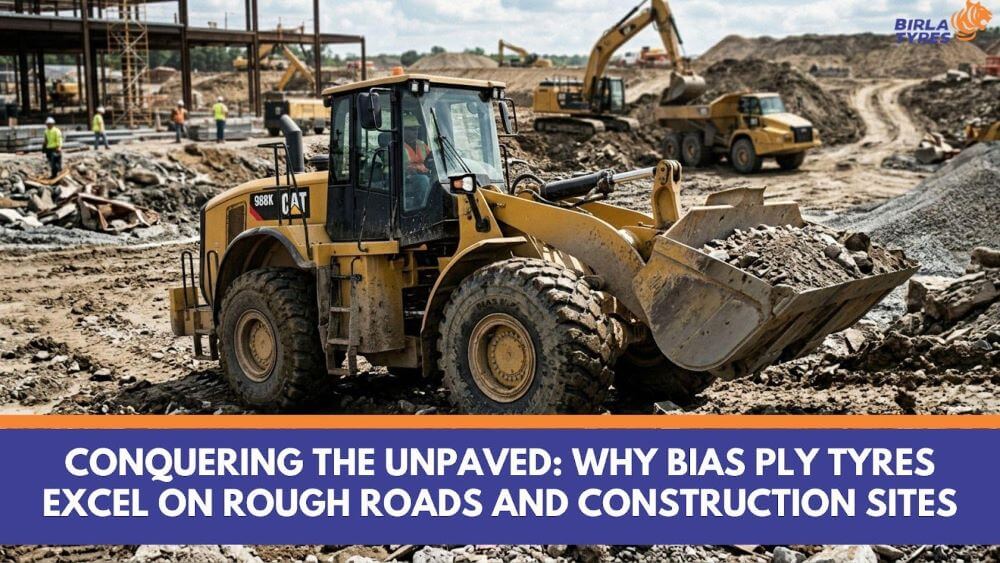
Tyre performance can make or break operational efficiency in unpredictable terrain conditions. Whether it’s the busy construction site or the harsh environment of mining tunnels, rough roads require robust tyres to prevail against them.
Bias tyres are the champions of harsh roads and uneven surfaces where sharp rocks and invisible potholes always challenge off-road vehicles. This ply construction not only provides superior performance on the harshest of roads, but also ensures productivity and heavy-duty work.
While radial tyres have been prevailing on highways and smoother terrains, there are reasons why bias ply construction provides tyres with more advantages on rough and unpaved surfaces. Learn how bias construction improves efficiency on unpaved roads through this comprehensive blog post.
What Are Bias Ply Tyres?
Bias-ply tyres are known as cross-ply tyres. Constructed with multiple layers of fabric cords, this ply construction follows a criss-cross pattern and alternating angles. The diagonal and multiple-ply-based design is a cornerstone of bias ply construction for off-road tyres.
This construction ensures that the tyres have a thick and rigid structure extending from the bead to the bead, reinforcing both the tread sidewalls.
Key Advantages of Bias Ply Tyres on Rough Terrain
The following are the major advantages of using bias ply construction for off-road terrain tyres:
1. Robust Sidewall Strength
One of the standout features of bias ply tyres is their thick and reinforced tyre sidewall. Thanks to this design, off-road tyres have better sidewall strength.
The design provides extra sidewall protection against heavier impacts and punctures. Common occurrences on construction sites and rocky trails make off-road tyres prone to damage. That’s where this rigid and rough tyre construction helps the most.
2. Superior Load-Carrying Capacity
Bias tyres have a criss-cross ply design, making them capable of handling substantial weight. The multi-ply construction of the tyre distributes pressure evenly across the tyre. It makes them ideal for vehicles that carry heavy machinery, mining loads, and building materials. This structural strength ensures consistent performance even under maximum payloads.
3. Resistance to Cuts, Chips, and Abrasions
Rough roads are never forgiving. Debris, sharp stones, and potholes quickly damage and wear down tyres. Tyre construction methods other than the bias ply construction can hardly handle the hardship.
The durable rubber compounds, coupled with the criss-cross design of bias ply construction, form thicker tread blocks. The tread patterns are designed to resist chips and cuts, extending the service life in an abrasive environment.
4. Stability on Uneven Surfaces
The stiff sidewall design and the uniform tread contact of truck and bus bias tyres ensure stronger grip, traction, and stability, especially on uneven surfaces. Whether a driver is taking the vehicle out on muddy construction sites or cruising it through a gravel-strewn access road, these tyres offer predictable handling and reduced risk of tyre roll and sidewall flexing.
5. Self-Cleaning Tread Patterns
Many bias tyres designed for off-road use have aggressive, self-cleaning tread patterns. These features enhance self-cleaning efficiency.
For example, the tyres can self-sufficiently eject stones, mud, and debris from the grooves, maintaining slippage and ensuring traction. This is especially a must-have in wet or clay-heavy environments where tyre clogging becomes a serious issue.
6. Heat Resistance in Low-Speed, High-Torque Conditions
Construction sites don’t have vehicles running at high speed. Yet, the harsh terrain requires the vehicles to generate immense torque output at low speeds to overcome the difficult roads. That’s where excessive heat forms at the tread level, wearing the tyre faster.
Without a tough, well-built and rigid construction capable of heat resistance, it’s highly difficult to dissipate heat and drive safely in enclosed and underground environments.
Application Scenarios: Challenges Bias Tyres Excel Against
Bias tyres aren’t a one-size-fits-all solution. But these tyres, in the right setting, are capable of outperforming alternatives. Here are some rough environments where bias tyres outperform other types of tyres:
1. Construction Sites
Construction sites are full of rubble, uneven grounds, and stones. This is where the tyres take the most harsh beating. The toughness of the bias tyres provides the stability required for loaders, dumpers, and backhoes. Therefore, these tyres are a must-have for equipment and vehicles operating on construction sites.
2. Mining and Quarry Operations
The high-impact zones of quarry operations require tyres capable of handling abrasion and heavy loads. Bias tyres have the durability to handle the heat and the unforgiving surface.
3. Rural and Forest Roads
Rural roads with poor maintenance and muddy and bumpy conditions need robust tyres capable of handling the surprises. Bias tyres provide the resilience and traction needed to navigate through these roads without needing constant replacements.
4. Military and Emergency Vehicles
In an off-road, rugged and disaster-stricken area, vehicles must be capable of handling. In off-grid or disaster-stricken areas, vehicles must perform reliably on unpredictable terrain. Bias tyres offer the ruggedness and load capacity needed for such critical missions.
Maintenance Tips to Maximise Performance
Although bias tyres are capable of withstanding the most difficult terrain conditions, they also require timely maintenance. Here’s how you ensure the longevity of the tyres that excel in off-road terrains:
Regular Inspection: Look for signs of cuts, wear, bulges, or embedded debris. Early detection is the best way to prevent damage that can lead to costly disasters.
Proper Inflation: Tyre pressure maintenance is a key to ensuring efficiency in both over-inflated and under-inflated tyre conditions. It can compromise safety and performance if you don’t keep the tyre pressure at the manufacturer’s recommended threshold.
Load Management: Avoid overloading the vehicle to ensure that the weight is distributed evenly. This leads to even tyre wear and returns a longer tyre service life.
Timely Rotation and Replacement: Tyre rotation has a significant role to play in sustaining a tyre’s health. Replace tyres that show signs of excessive wear or casing fatigue. This will help maintain reusability and reduce the cost of replacement.
Excelling at the Most Difficult Terrains
Although bias tyres aren’t the newest technology for tyre construction, they are still the conquerors of the off-road terrains. Yes, most passenger vehicles predominantly use radial construction. But their robust construction, superior load-bearing capacity, and resistance to harsh conditions make them a reliable choice for industries that demand performance under pressure.
For operators navigating the toughest environments, bias ply tyres offer the confidence to keep moving forward, no matter how rough the road gets.
